Project
The Growler Spot | Craft Beer Bar, Fulshear, TX
Brand Snapshot
“Craft Beer, Cold Pours, Good People”
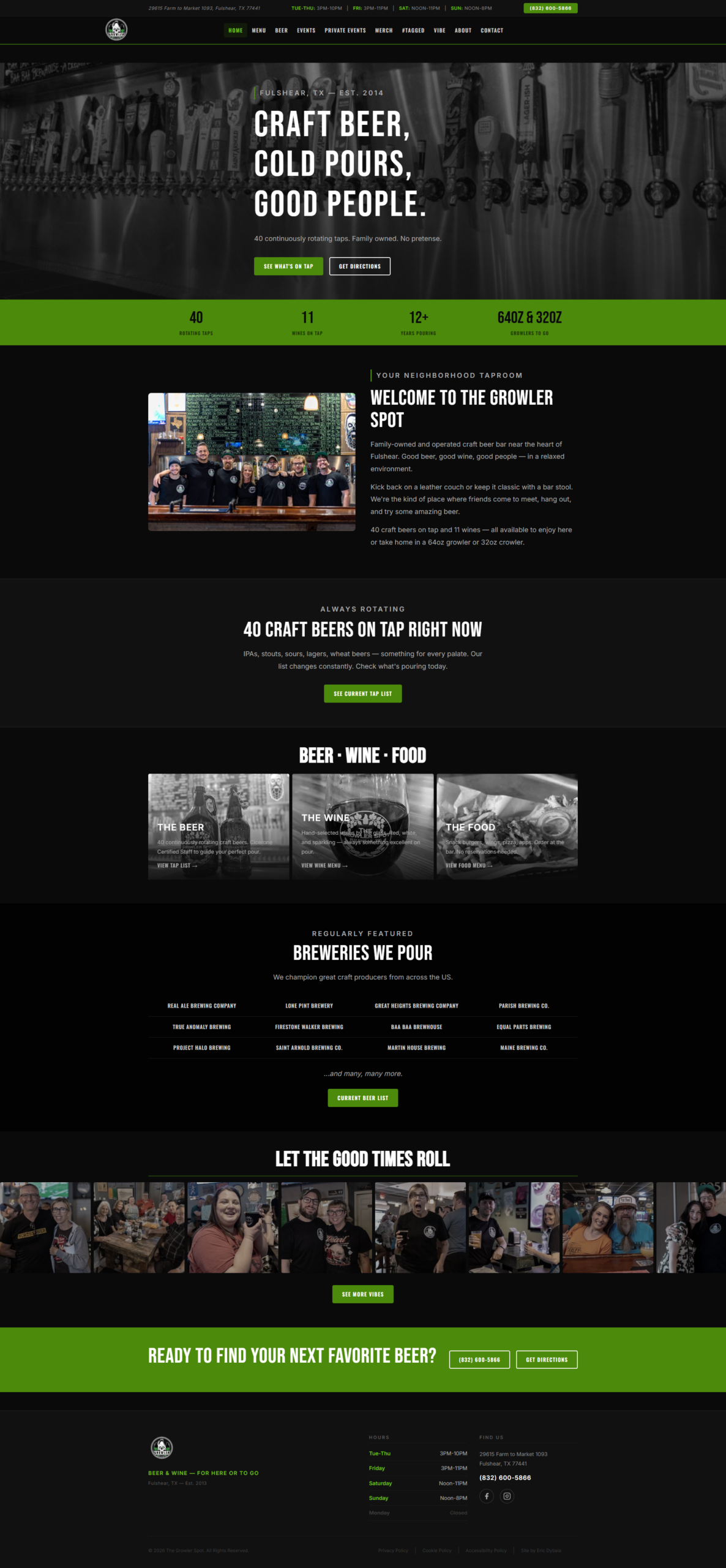
The existing site had a real brand behind it, a skull-and-growler mark, a name people already knew, but the execution was working against it. The mobile nav was a static hamburger with no priority ordering. The hero section carried no CTA above the fold on mobile, so visitors landed with no next step. The 40-tap count, the bar’s strongest selling point, was buried below the fold instead of driving the page. Events ran as photo-only blocks with no structured date or time data. The footer had every piece of information a visitor needed and no hierarchy to make any of it findable.
Decision: keep the skull-and-growler mark and evolve the system around it rather than rebrand. The redesign built a dark, high-contrast visual language, black and charcoal surfaces, green accent lines, condensed Oswald and Barlow headers, that reads as a taproom rather than a template. Navigation restructured to mobile-first with the tap count and hours pinned near the top of the scroll. CTAs went verb-first across the site, “See Today’s Beers,” “Fill Your Growler,” replacing the generic “Learn More” pattern the old site relied on.
The standout piece is #Tagged, a sticker-sighting map that turns customer check-ins into a public feature. Visitors upload a photo of the Growler Spot sticker wherever they’ve taken it, and the site extracts GPS and date data from the image in the browser, plots it on a Leaflet map with dark CARTO tiles, and logs it alongside running stats: total tags, states, countries, miles from home base. No API keys, no third-party billing accounts, the map runs entirely on open data. Submissions land as drafts for review before anything publishes, so the feature stays public-facing without being unmoderated. It’s the one piece of the site that turns the audience into the content.
Underneath both the redesign and #Tagged sits a two-plugin architecture, one for sightings, one for events, fully independent so an update to one can’t break the other. The initial build ran eight weeks. Development has stayed active since, with the plugin system built specifically so new features extend the site without touching what already works.